Thursday, 3 May 2018

​Dear Sagar Media Inc,Petitioning to RBI, Governor Urjit          

Dear Sagar Media Inc,
“The tax department wants to extract taxes on ‘services’ that are ostensibly provided FREE to bank customers. What can be more absurd than this? It has happened because we as customers are not taking our protest to the next level or protesting enough.”
“Bank deposits are already taxed at the highest level, how ridiculous is it to dream up taxes for basic banking operations like deposits, withdrawals, balance inquiry and cheque books?”
Sign Sucheta Dalal’s petition to ensure that banks should have fair charges and services for all their customers.
Petitioning Reserve Bank of India, Governor
Governor: RBI-Finance Ministry: Stop Banks Fleecing Depositors
Petition by Sucheta Dalal
mumbai, India
 2,30,278 
Supporters
Dr Urjit Patel
Governor,
Reserve Bank of India
Sub: Unfair treatment of bank customers
Dear Dr Patel,
We, a group of bank consumers and non-governmental organisations (NGOs) are disturbed at the unfair treatment that bank customers suffer in the form of frequent, arbitrary and one-sided increase in banking charges, or the refusal of banks to automatically pass on contractual benefits such as lower interest to those with floating rate home loans, or the rampant mis-sellling of third-party products such as insurance.
The attached memorandum is the consensus view of a group of knowledgeable consumer activists, policy watchers, bankers, and trade unions, request urgent policy changes to ensure that banks treat bank customers fairly.
Dr Patel, we are confident you will have the memorandum examined and initiate action at the earliest. We look forward to active engagement and a line of acknowledgement from your office
Memorandum
The Reserve Bank of India (RBI) as the banking regulator has been proactive in improving the customer service rendered by banks. However, the RBI has not taken banks to task on the many customer-unfriendly practices that are increasing with impunity.
Over the years, the RBI has remained silent on several anti-depositor actions of banks. The Banking Ombudsman’s rulings also tend to side with banks, making no attempt to observe the pattern of complaints which would amply bring out rampant mis-selling of insurance and wealth management products. We have identified some specific areas and request RBI’s intervention to take corrective steps after engaging with customers.
1.     Digital Payments: While the Union Government is pushing consumers into digital transactions, we are not adopting global best practices to protect consumers. On 11 August 2016 (https://www.rbi.org.in/scripts/bs_viewcontent.aspx?Id=3235) the RBI issued a draft circular on limiting customer liability and shifting the onus of proving customer fault on banks.  RBI had sought feedback from public before 31 August 2016. However, it has not yet been converted into a Master Circular.
We feel that with the increased use of digital payments post the demonetisation drive, it is necessary to have in place a mechanism or system to protect customers from unauthorised banking transactions. A Master circular/notification by the Reserve Bank on limiting liability in an unauthorised banking transaction will make a huge impact on protecting customers from frauds.
2.      Bank Account Number Portability: We feel effective portability of bank accounts is a good anti-dote to several restrictive practices followed by the banks. This has been successfully implemented in the telecom sector and helped consumers. No practical portability option exists at present due to tie in primarily due to standing instructions for both incomes (pensions, annuities, dividends, interest) and expenses (utilities etc.) and the difficulties associated with changing those standing instructions.
Portability of loan exists on paper, but has to be made easier and seamless to execute without imposing fiscal and non-fiscal burden on the consumer.
The Prime Minister’s Awas Yojana now provides interest subsidy to loan taken by eligible households. Allowing lenders to overcharge for such loan consumers is allowing them to appropriate this subsidy provided from taxpayers’ funds. It is the duty of the government and regulators to ensure that the lenders do not appropriate this taxpayers’ money by overcharging the borrowers and create barriers when the borrower wants to shift this loan.
3.     Unfair agreements: Banks cannot have one-sided terms and conditions in their agreements with consumers. One-sided loan agreements with details buried in the fine print are bleeding customers. The Reserve Bank, in its communication must be specific about barring the levy of unfair charges otherwise bankers take undue advantage and fleece consumers. A basic model agreement must be prescribed by the RBI to limit banks from harming customers.
4.     Charges: Frequent increase in charges and billing customers by stealth through opt-out clauses that are not noticeable must be stopped immediately. For e.g. HDFC Bank started levying charges for an invite only program, which unethically assumes that the customer is already in and willing to pay for it. The levy is stopped only when the consumer notices it and calls the bank to protest, this too is not an easy process.
5.     Faulty Systems: Wrong emails being tagged by faulty algorithms of banks and finance companies, are leading to emails being sent to people who have no borrowing or accounts. This is a serious issue that will affect people’s credit history; the use of such faulty algorithms and defeats the purpose of KYC and causes serious harassment.
6.     Master Circular Changes: Frequent changes in the Master Circular or Notifications by RBI require banks to make changes in their Core Banking Systems.  This leads to high IT costs, which are ultimately passed on to consumers. The RBI must restrict changes in its circulars to 4 times a year to keep costs in check.
7.     Consumer Charter: The RBI issued the Charter of Customer Rights on 3 December 2014 recognising five basic rights of bank customers and asks banks to adapt and implement it after their Board’s approval. These are: (i) Right to Fair Treatment; (ii) Right to Transparency; Fair and Honest Dealing; (iii) Right to Suitability; (iv) Right to Privacy; and (v) Right to Grievance Redress and Compensation.
The Charter covers almost every problem that consumers were likely to face. Three years later, the RBI has not fixed timeframes for grievance redressal nor announced penalties for failure to treat consumers fairly, despite repeated appeals by consumer groups. Consequently, the Charter remains a toothless statement.
A Master circular/notification by the Reserve Bank giving teeth to the Charter of Customer Rights with clear provisions fixing timelines for redressal and escalation, penalty for negligent service and interest/compensation to customers for losses caused due to mis-selling is urgently needed.
Yours truly,
Sucheta Dalal , Trustee Moneylife Foundation
Debashis Basu, Trustee Moneylife Foundation
Dhirendra Kumar, Foundation Value Research
Abhay Datar, Mumbai Grahak Panchayat
Sunil Bhandare, All India Bank Depositors Association
C H VENKATACHALAM, General Secretary, All India Bank Employees Association
Harsh Vardhan Roongta, Financial Expert and Advisor
R N Bhaskar, Sr. Editor, Columnist
Yogesh Sapkale, Director, Moneylife Foundation
Dolphy D’souza, Convener, Police Reforms Watch
Mahua Ghose, Consultant
Partha Mansukhani, Public Concern For Governance Trust
Lalita Joshi, All India Bank Employees Association
Raj Vaidya, Central Bank Employees Union
Advocate Bapoo Malcolm
Shubhada Khandekar, Author
A V Shenoy, Rashtriya Matadata Manch
Gautam Mody, General Secretary, New Trade Union Initiative
Sign the petition

Macron thanks Australian PM

France’s President Emmanuel Macron may have had le vin rouge on his mind when he thanked Australian Prime Minister Malcolm Turnbull and his “delicious wife” for their warm welcome on his official visit.
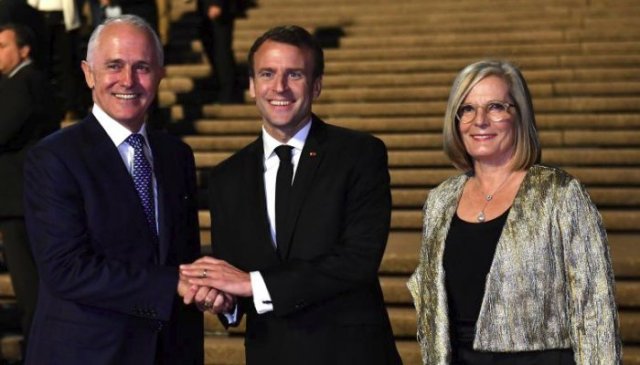
193821_6390025_updates.jpg
Macron and Turnbull had navigated their way through several sensitive diplomatic issues at a news conference in Sydney on Wednesday, only for the president to make the linguistic slip while making closing remarks in English.
He thanked Turnbull and his wife, Lucy, for being good hosts and acknowledged the fine food and wine he had enjoyed on his visit, before exclaiming: “I want to thank you for your welcome, you and your delicious wife for the warm welcome.”
The comment lit up social media, replacing discussion about the leaders’ deliberations on more weighty issues such as China’s growing influence in the region.
But what exactly did Macron try to say?
He may have had the word “delicieux” in mind, which, though sounding similar to “delicious,” would better translate into “lovely” or “delightful.”
While more often used to describe a pastry or a meal, the word “delicieux” can also describe a person, even if it is a somewhat old-fashioned usage.

Dominican Republic break ties with Taiwan

Chinese government has announced that it has established diplomatic ties with the Dominican Republic in the Caribbean, which in turn cut its ties with Taiwan.
Taiwanese media severely criticized China, reporting that the Chinese government pledged 3-billion dollars in loans to the Dominican Republic.
Chinese Foreign Minister Wang Yi and his Dominican counterpart, Miguel Vargas, gave a joint news conference in Beijing on Tuesday, disclosing that the 2 countries have formed diplomatic relations.
In a joint statement, the Dominican Republic said that “there is only one China in the world.” It severed diplomatic ties with Taiwan on the day.
Taiwan’s media quoted Taiwan officials as saying that the Chinese government promised to extend 3-billion dollars in loans for developing infrastructure, including railways and highways.
The sum would account for more than 20 percent of the island nation’s annual state budget. Taiwan is severely criticizing the Chinese government for promising such a huge loan package in order to establish diplomatic ties with the Dominican Republic.
As a result, Taiwan is left with diplomatic ties with only 19 countries — the smallest number ever. The Chinese government is seen to be applying increasing diplomatic pressure to isolate Taiwan’s Tsai Ing-wen government.

Cambridge Analytica winds up

Cambridge Analytica, the political consultancy firm at the center of the Facebook data privacy scandal, is shutting down, the Wall Street Journal reports. In March, it emerged that Facebook had exposed the data of up to 87 million users to the firm’s researchers. Last month, the company suspended its CEO Alexander Nix, ahead of investigations to determine whether it had engaged in any wrongdoing.

Explosion at Lag BaOmer,Jewish festive in London

30 people have been injured in an explosion during a celebration of lag BaOmer Jewish festival,  in north London late Wednesday.
The explosion was reportedly sparked by mobile phones being thrown into bonfires, which are a tradition for Lag BaOmer, an annual Jewish festive event.
Hundreds gathered in Stamford Hill at the time. Around 10 people are believed to have been injured by the fire, while 20 others injured in the scramble to escape, local media reported.

American detained freed in N Korea

North Korea has reportedly transferred three American prisoners out of labor camps into a hotel, ahead of the planned summit between Kim Jong-un and Donald Trump. According to a South Korean activist representing ‘Family Assembly of those Abducted to North Korea’, the three, Kim Hak-song, Kim Sang-duk and Kim Dong-chul, were moved to the outskirts of Pyongyang sometime in mid-April. The detainees, convicted of “hostile acts” against the North Korean government and people, are widely expected to be freed as a goodwill gesture ahead of the much-anticipated talks.

Wednesday, 2 May 2018

Modi most popular world leader on Facebook

Trump may rule the roost on Twitter, but he lags far behind Indian Prime Minister Narendra Modi on Facebook, according to a study published Wednesday.
Image may contain: 1 person, close-up
Modi is by far the most followed world leader on the gargantuan social networking platform, counting 43.2 million followers.
That is nearly twice the 23.1 million who follow Trump, according to a study by communications firm Burson-Martsteller.
Of course, Facebook tends to be more widely used in Asia than Twitter which may also account for the large number of followers for Asian leaders.
Cambodia´s prime minister Hun Sen shot into fifth position after his following swelled nearly 50 percent to 9.6 million people, the study found.
He therefore counts “more Facebook fans than Cambodia has Facebook users (7.1 million), but still (fewer) than the 14.4 million Khmer speakers on Facebook,” it pointed out.
The study, which analysed the activity of 650 personal and institutional Facebook pages of heads of state and government and foreign ministers since January 1, 2017, meanwhile showed that Trump easily counted most interactions on the platform.
The US president counted a total of 204.9 million comments, likes and shares over the past 14 months — nearly twice as many as Modi, who counted 113.6 million, the study said.
It also found that Trump on average posts five times a day on Facebook, which is more than double the number of posts from the Indian premier.
In terms of followers, the study put Queen Rania of Jordan in third place, with 16 million followers.
Wednesday´s study also highlighted the handful of world leaders who actually manage their Facebook pages themselves, instead of handing them off to social media teams.
New Zealand Prime Minister Jacinda Ardern is particularly active and is one of few who regularly broadcasts live on the platform, from her home and even from her car.
The seven-month-pregnant politician has become the “most loved” world leader on Facebook, the study found, pointing out that 14 percent of her interactions on the platform are love hearts sent by her followers.

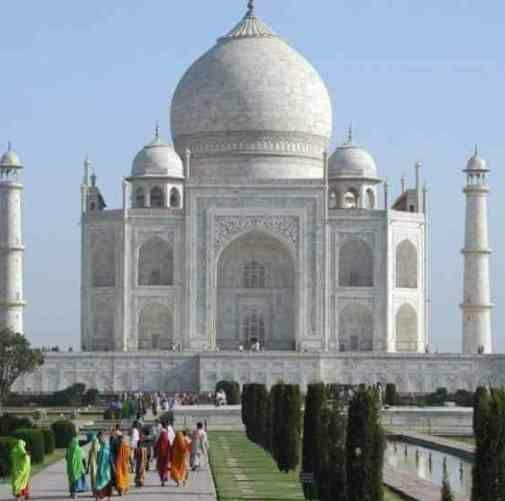
Pollution colouring the Taj Mahal.

Supreme Court order the government to seek foreign help to fix what it described as a worrying change in colour at the Taj Mahal.
27973403_896218260549833_6048290437961805807_n.jpg
Supreme Court on Tuesday sharply criticised the government for failing to protect the Taj Mahal, the centuries-old monument to love which has been changing colour because of pollution.
The brilliant marble of the Taj Mahal, a UNESCO world heritage site, has acquired a yellow tinge over the years. The colour of the marble “was first becoming yellow. Now it seems to be green and black,” a Supreme Court bench said after reviewing recent photos of the monument.
“It appears that you do not have expertise or you have (it) but do not want to utilise it, or you do not care about (the Taj Mahal),” the court said. “You all appear helpless. Money should not be the consideration…. We need to save it,”  court justices said.
The court said the famous tomb, built in the 17th Century from white marble and other materials, had turned yellow and was now turning brown and green.
Pollution, construction and insect dung are said to be among the causes.
Supreme Court justices MB Lokur and Deepak Gupta gave  Modi´s government and the government of Uttar Pradesh state a week to respond.
This is not the first time the Supreme Court has criticized  authorities on the issue. In February, it warned that the state government’s “ad hoc” approach was jeopardizing the monument.
Justices Madan Lokur and Deepak Gupta examined photographs of the palace submitted by environmentalists and ordered the government to seek expertise from inside India and abroad.
BBC

M7.0 – ANATAHAN REG, N. MARIANA ISLANDS

Preliminary Earthquake Report
Magnitude7.0
Date-Time
  • 2 May 2018 04:41:15 UTC
  • 2 May 2018 14:41:15 near epicenter
  • 2 May 2018 08:41:15 standard time in your timezone
Location16.529N 144.817E
Depth156 km
Distances
  • 176 km (110 miles) NNW (327 degrees) of SAIPAN, Northern Mariana Islands
  • 205 km (127 miles) SSW (210 degrees) of Pagan, Northern Mariana Islands
  • 341 km (212 miles) N (1 degrees) of HAGATNA, Guam
  • 2071 km (1287 miles) ESE (118 degrees) of Naha, Okinawa, Japan

GST collection surge

 Goods and Services Tax (GST) collection in entire 2017-18 stood Rs 7.41 lakh crore, in March the figure was Rs 89,264 crore. “The total gross GST revenue collected in April 2018 is Rs 1,03,458 crore of which CGST is Rs 18,652 crore, SGST is Rs 25,704 crore, IGST is Rs 50,548 crore (including Rs 21,246 crore collected on imports) and Cess is Rs 8,554 crore – including Rs 702 crore collected on imports,” Finance Ministry said in a statement.
The buoyancy in the tax revenue of GST reflects the upswing in the economy and better compliance, it said. However, it is usually noticed that in the last month of financial year, people also try to pay arrears of some of the previous months also and, therefore, April 2018 revenue cannot be taken as trend for the future, it added.
The total revenue earned by Central Government and State Governments after settlement in April, 2018 is Rs 32,493 crore for Central GST and Rs 40,257 crore for State GST, it said.
As far as total number of GSTR 3B returns for March up to April 30 was concerned, nearly 69.5 per cent filed returns. As many as 60.47 lakh as against 87.12 lakh, who are eligible to file returns for March, did the needful, it said.
April was also the month for filing of quarterly returns for composition dealers, it said. Out of 19.31 lakh composition dealers, 11.47 lakh have filed their quarterly return (GSTR 4) and have paid total tax of Rs 579 crore, which is included in Rs 1.03 lakh crore of total GST collection, it added.

TORBAAZ IN BISHKEK

Torbaaz’ in Bishkek
   While the teaser of Rajkumar Hirani’s upcoming film Sanju with Ranbir Kapoor playing Sanjay Dutt onscreen has taken the social media by storm, and now Dutt is busy shooting a month-long schedule for his next upcoming film ‘Torbaaz’ in Kyrgyzstan.
   Dressed in his usual stylish self, the actor posted his picture on Instagram while sporting a cool scarf to match the outdoors as he started shooting for the film in the capital city of Bishkek yesterday. The actor is essaying the role of an army officer in the film which is directed by award-winning director Girish Malik & produced by ace filmmaker Rahul Mittra. Presented by Raju Chadha, ‘Torbaaz’ will also feature Nargis Fakhri, Rahul Dev & Rahul Mittra in pivotal roles.
  The story revolves around suicide bomber kids in Afghanistan and is already being talked about for its high content & world class cinematic experience. Incidentally, Rahul Mittra & Girish Malik are the first Indian filmmakers to shoot in the picturesque country of Kyrgyzstan.


image1.jpeg
image1.jpeg

Swede leader not for multiculturalism

Kasselstrand says Sweden’s ‘multiculture is an impossibility and a total failure’. According to him It is not possible to combine widely different peoples in one country and expect good results.
“The historical experience of multicultural societies points to the opposite. Disagreements and conflicts, not a harmonious social life […] is the result of multiculturalism and mass immigration,” he said.

Introducing Metamorphoses by Prof Yochai Benkler


May
2
NITI Aayog, India International Centre and Centre for Policy Research are pleased to invite you to the keynote
Introducing Metamorphoses
by Prof Yochai Benkler
Wednesday, 2 May 2018, 6:30 p.m.
Deshmukh Auditorium, India International Centre
Metamorphoses Website
Professor Yochai Benkler will be delivering the keynote ‘Introducing Metamorphoses’ – a series of nine interactions, which will unfold over a year, covering different aspects of the digital revolution. Metamorphoses is a modest effort to try and bridge the gap between digital technologies, which are transforming our lives, and our understanding of their multiple dimensions. The series is a joint initiative between NITI Aayog (the Government of India’s think tank), Indian International Centre (IIC) and Centre for Policy Research (CPR).
The keynote will set the big picture, where Prof. Benkler will talk about current and future technologies and their likely impact on democracy, development, growth and inequality.
Inaugural remarks: Mr N N Vohra, President IIC
Brief opening remarks by Mr Amitabh Kant, Chief Executive Officer, NITI Aayog; Ambassador Shyam Saran, Life Trustee, IIC and former Foreign Secretary; and Ms Yamini Aiyar, President & Chief Executive, CPR.
Keynote by Prof. Benkler followed by a curated question and answer session with the audience.
Closing remarks by Air Marshall Naresh Verma, Director, IIC
Prof. Yochai Benkler is the Berkman Professor of Entrepreneurial Legal Studies at Harvard Law School, and faculty co-director of the Berkman Klein Center for Internet and Society at Harvard University. Since the 1990s he has played a role in characterizing the role of information commons and decentralized collaboration to innovation, information production, and freedom in the networked economy and society. His books include The Wealth of Networks: How social production transforms markets and freedom (Yale University Press 2006), which won academic awards from the American Political Science Association, the American Sociological Association, and the McGannon award for social and ethical relevance in communications. In 2012 he received a lifetime achievement award from Oxford University in recognition of his contribution to the study and public understanding of the Internet and information goods. His work is socially engaged, winning him the Ford Foundation Visionaries Award in 2011, the Electronic Frontier Foundation’s Pioneer Award for 2007, and the Public Knowledge IP3 Award in 2006. It is also anchored in the realities of markets, cited as “perhaps the best work yet about the fast moving, enthusiast-driven Internet” by the Financial Times and named best business book about the future in 2006 by Strategy and Business. Benkler has advised governments and international organizations on innovation policy and telecommunications, and serves on the boards or advisory boards of several nonprofits engaged in working towards an open society. His work can be freely accessed at http://www.benkler.org.
The talk will be livestreamed on the IIC website; available on Facebook-live on the Metamorphoses Facebook page; and video recordings will be available on YouTube, as well as disseminated through social media channels hosted on the Metamorphoses website. The promotional video for Metamorphoses can be accessed here.
Sign up for the event at this link. This is necessary given seating requirements.